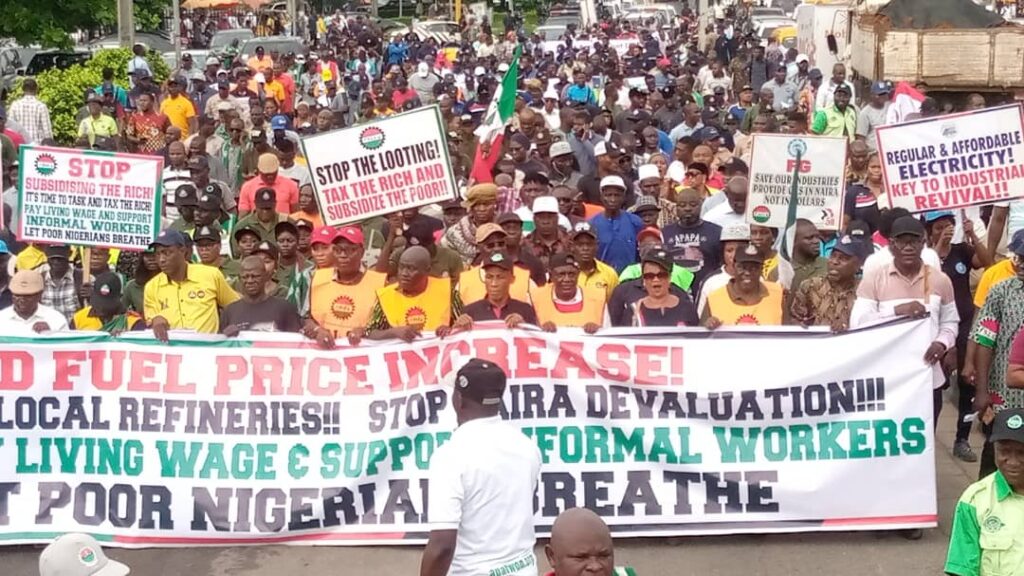
2025: Nigerian Workers’ pushing hard for survival amidst economic challenges
By Bimbola Oyesola
The year 2025, for Nigerian workers, unfolded as a year of grinding economic pressure, where wages stood still while the cost of living spiralled relentlessly upward. From the opening months, inflation dictated daily survival, swallowing salaries through rising food prices, escalating transport fares, higher electricity tariffs and unaffordable rents. Across sectors, public service, manufacturing, education and informal economy, workers spoke the same language of exhaustion, describing an economy that demanded productivity without offering dignity.
Organised labour framed this reality not as a cyclical hardship, but as a structural failure. The Nigeria Labour Congress (NLC) repeatedly warned that wages divorced from economic realities threatened social cohesion.
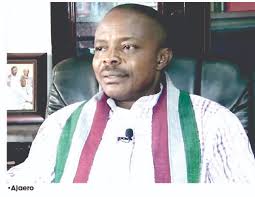
“A worker is not a machine,” NLC President Joe Ajaero said during one of several press briefings in the year. “You cannot expect efficiency when people are pushed to the edge of survival.”
The Congress argued that the wage crisis had become a moral question as much as an economic one, insisting that policies which ignored human welfare would ultimately undermine national stability.
Labour Pushback on Policy
As economic pressures deepened, labour’s confrontation with government policy intensified. The unveiling of the National Industrial Relations Policy (NIRP) 2025 became a flashpoint, with unions warning that it dangerously reframed industrial action as a threat rather than a democratic right. Ajaero condemned what he described as an obsession with suppressing strikes while ignoring their root causes.
“We are shocked that the Federal Government has singled out industrial strikes as its headache,” he said, stressing that collective action was constitutionally protected and historically earned.
The Trade Union Congress (TUC) reinforced this position, cautioning against any attempt to narrow union space or weaken collective bargaining.
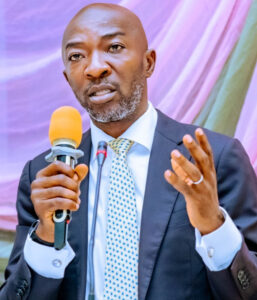
The TUC President, Festus Osifo warned that restrictive labour policies would only compound economic hardship. “When workers are silenced and wages stagnate, frustration grows, and frustration breeds instability,” he said.
Labour leaders maintained that meaningful reform must centre workers’ welfare, not merely macroeconomic indicators detached from lived realities.
Insecurity and the Streets Speak
Midway into the year, Nigeria’s worsening security situation pushed organised labour beyond boardrooms and policy papers. Rising incidents of kidnapping, violent attacks and communal displacement began directly affecting workers’ safety and productivity. Labour leaders openly linked insecurity to unemployment and economic deprivation, arguing that unsafe working environments were fast becoming a national labour issue.
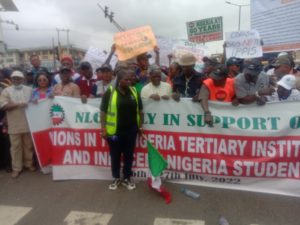
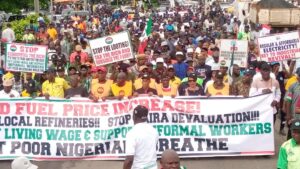
This culminated in a nationwide protest against insecurity, where workers joined civil society groups across major cities to demand protection of lives alongside livelihoods. Placards bearing messages such as “No security, no productivity” reflected labour’s insistence that economic growth was impossible without safety. Both NLC and TUC warned that “no nation can function when workers leave home unsure they will return alive,” framing insecurity as both a governance failure and a labour crisis.
Education, Industrial Action and Broken Promises
The education sector became another theatre of labour struggle in 2025. Prolonged disputes between the Federal Government and the Academic Staff Union of Universities (ASUU) drew organised labour deeper into advocacy for systemic reform. In October, the NLC issued a four-week ultimatum, threatening a nationwide strike if unresolved agreements and unpaid allowances persisted.
Ajaero sharply criticised the application of the “no work, no pay” policy to striking lecturers, placing responsibility squarely on government’s failure to honour agreements and adequately fund education.
Labour described the crisis as a symptom of decades of neglect rather than union intransigence, warning that underfunded universities endangered Nigeria’s future workforce.
Corporate Disputes
Beyond government relations, labour also confronted corporate power in 2025. Disputes in strategic sectors including oil and gas sector, particularly involving the Dangote Refinery, triggered nationwide mobilisation orders from the NLC.
Workers accused employers of bypassing unions and engaging in arbitrary dismissals, the allegations companies contested even as negotiations continued.
Labour maintained that no private enterprise should operate above Nigerian labour law, insisting that economic development must not come at the expense of workers’ rights.
Reflection and Future
As the year closed, organised labour adopted a reflective but resolute tone. In its Christmas message, the NLC thanked workers for resilience in what it described as one of the most challenging economic years in recent history.
“We will continue to protect the constitutional rights and hard-won liberties of Nigerian workers,” Ajaero said, emphasising labour’s preference for dialogue while warning that patience had limits.
The message underscored labour’s belief that economic reform without social justice was unsustainable. “A nation cannot prosper when its workforce is impoverished.” the NLC stated, calling on government and employers to prioritise inclusive governance, fair wages and humane working conditions.
Osifo echoed similar sentiments in his year-end reflections, linking economic hardship, unemployment and insecurity as urgent national challenges requiring decisive action.
Analysts observed that 2025 marked a turning point for organised labour, the workers were more coordinated, vocal and assertive in shaping national discourse than in years past.
As Nigeria moves into a new year, the message from labour is unmistakable: without fair wages, secure workplaces and inclusive policy-making, which is genuine engagement with the workers, industrial’s peace will remain fragile. The events of 2025 have made one thing clear, Nigerian workers are running out of patience, and their voices can no longer be ignored.