Easter Message: NLC demands leadership with responsibility

…warns that workers will no longer bear burden, “unjust suffering”
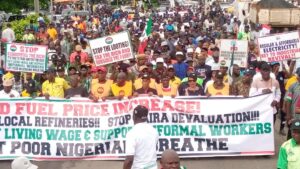
The Nigeria Labour Congress (NLC) has issued a powerful Easter message blending faith with politics, calling on the nation’s leaders to embrace sacrifice and deliver meaningful change, while warning that Nigerian workers will no longer bear the burden of what it described as “unjust suffering.”
The NLC in its Easter message by its President, Joe Ajaero framed Easter as more than a religious celebration, describing it as “a deep moment of ideological clarity” that should inspire both leaders and citizens to reflect on sacrifice, justice, and national renewal.
“As we celebrate Easter this year, we salute the resilience and unyielding spirit of Nigerian workers,” Ajaero said, praising their “daily struggle for dignity, justice, and a better life” despite mounting economic and social challenges.
Drawing parallels with the crucifixion of Jesus Christ, the labour leader stressed that Christ’s sacrifice was made for the redemption of humanity, not personal gain — a sharp contrast, he argued, to the situation faced by Nigerian workers today.
“The sacrifices demanded of Nigerian workers are ones we never consented to,” Ajaero said. “We are sacrificing our wages on the altar of profiteering, our safety on the altar of insecurity, and our lives on the altar of failed governance.”
He accused political leaders of insulating themselves from hardship, noting that many “hide in armoured vehicles or surround themselves with heavy security,” while ordinary citizens face worsening living conditions.
The NLC president urged those in power to “learn from the Cross,” calling on them to abandon self-interest and instead treat governance as “a platform for sacrificial service.”
“Policies must be tools of liberation, not weapons of oppression,” he said, adding that government must act decisively to tackle poverty, insecurity, and collapsing infrastructure.
Ajaero highlighted the rising cost of transportation as a major concern, describing it as “a heavy yoke on the necks of workers” that consumes incomes and deepens hardship across the country.
He also condemned the persistent electricity crisis, calling it “a weapon of mass disempowerment” that cripples industries, destroys small businesses, and leaves millions of homes in darkness.
“We demand policies that restore public transportation, end the electricity crisis, stop the killings, and place the welfare of the masses above the profits of a privileged few,” he said.
The statement further criticised what it described as the misuse of state power to suppress workers’ rights and silence dissent, warning that such actions undermine the essence of leadership and contradict the spirit of Easter.
Calling for a shift toward “humane and responsive governance,” Ajaero urged authorities to be more sensitive to the plight of ordinary Nigerians and to prioritise inclusive policies that benefit the majority.
Despite the grim assessment, the NLC struck a hopeful tone, invoking the resurrection of Christ as a symbol of eventual triumph over adversity.
“Just as Christ emerged triumphant, so shall the Nigerian worker emerge from the grave of poverty, exploitation, and bad governance,” Ajaero declared.
He emphasised, however, that such victory would not come passively, but through “collective struggle, solidarity, and a refusal to accept the unacceptable.”
Reaffirming the union’s commitment, Ajaero said the NLC would continue to push for a Nigeria where national wealth is used “for the welfare of the many, not the luxury of the few.”
The statement concluded with Easter greetings to Christians and Nigerians at large, urging citizens to renew their commitment to justice, liberty, and national transformation.
“Let this Easter strengthen our resolve to demand sacrifice from those who lead,” Ajaero said, “and to build a nation where justice, peace, and prosperity are the birthright of every Nigerian.”