How poor funding, policy gaps fuel food crisis, impoverish farmers in Africa
A new study has attributed the deepening food insecurity across Africa to chronic underfunding of agriculture and weak policy implementation by governments across the continent.
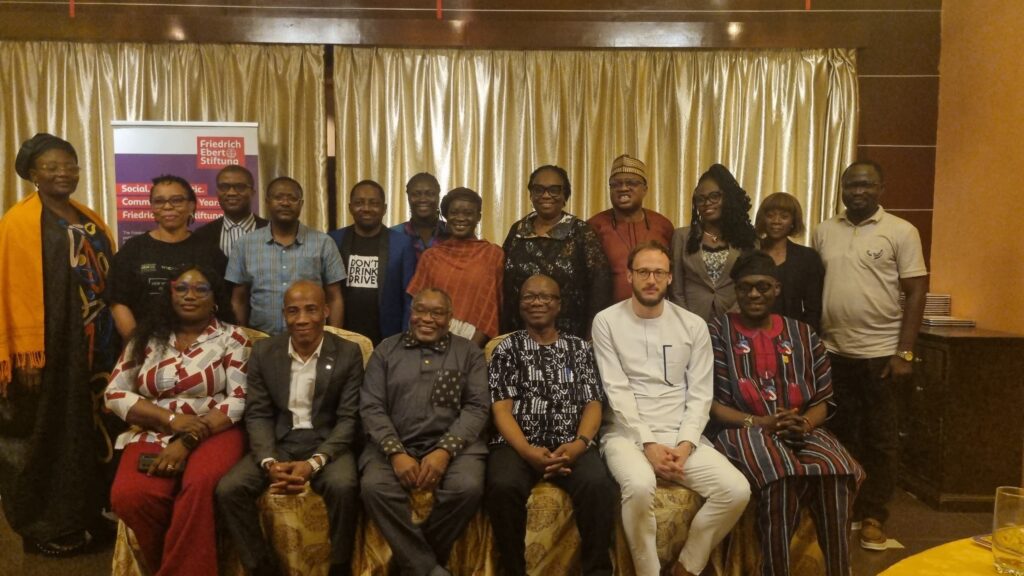
Presenting the findings in Lagos during the launch of his new book, ‘How Africa Eats’, Professor David Luke of the London School of Economics said despite several continental frameworks designed to boost agricultural productivity and support workers in the sector, most African countries have failed to meet agreed investment targets.
He cited the African Union’s Comprehensive African Agricultural Development Programme (CAADP), which mandates member states to allocate at least 10 percent of their annual budgets to the agricultural sector, as an example of a commitment that has largely been ignored.
“What we found is that only a few countries have ever reached that target. And when it comes to private investment, African banks are not really lending to agriculture. We found that bank rates are high. Because of our land tenure system, the communal holding of farmland cannot really be used as collateral for banks,” Luke stated.
He explained that while microcredit schemes exist, they often fail to support production at scale.
“By its very nature, it’s micro,” he said, adding that foreign direct investment and donor aid to agriculture remain very low. “Even before foreign aid collapsed this year, a very small portion of it ever went into agriculture,” he added.
Luke also blamed unfair competition and heavy subsidies in developed countries for worsening the continent’s food crisis.
“Each country is able to subsidize their agriculture. So for some specific products like rice, maize, wheat, livestock, meat, poultry, and fish, we find that each country is able to subsidize these things, so we cannot produce them competitively,” he said.
Beyond funding challenges, the study highlights the growing impact of climate change on food systems in Africa. Luke noted that farmers across the continent are increasingly facing droughts, floods, and locust invasions that disrupt production.
“The way that we see climate change manifesting itself is the high frequency of extreme weather events. It impacts farmers’ production, but the good thing is that a lot is being done on adaptation, though not well funded.”
According to him, there are encouraging innovations across Africa in areas such as irrigation, soil management, and the development of climate-resilient seed varieties.
However, these efforts are undermined by a severe lack of financial support. “The funding is woefully short,” he said. “We have all the plans, the nationally determined contributions that individual countries make, but these really are just wish lists because the funding is not really there to support them.”
Way Forward
On what actions African leaders must prioritize to end hunger, Luke identified access to finance as the most critical step. “I would say, in fact, the two top actions should be finance. Africa is not poor. Neither are we poor when it comes to arable land. The point is, we have not yet figured out how to use our financial systems, banks, pension funds, and others to support agricultural development.”
He added, “Our economies are trapped in commodity production alone, which is no longer viable in this 24th century. We have to break out of that. And one of the ways we can do that is through agricultural production, processing, and value addition.”
Luke said that part of the problem lies in risk perception among lenders, as communal land ownership prevents farmers from using farmland as collateral.
“But in other countries, they have been able to overcome these sorts of issues,” he noted, citing Kenya as an example with specialized agricultural development banks. “You cannot treat agriculture like any other economic activity. It is so vital. Agriculture can be a powerful driver of economic development for jobs, etc.”
Luke said the book, How Africa Eats, focuses on three key themes namely trade, agricultural financing, and climate, and argues that Africa’s export-driven model, which prioritizes raw commodities over value addition, has kept incomes low and poverty high.
“We are exporting commodities, we are not adding value, so we are not getting the value. When you have high poverty, people literally don’t have enough to have good nutrition,” he said.
Complementing his analysis, Professor Olawale Ogunkola of the University of Ibadan, who spoke at the event, stressed that solving Africa’s food crisis is a matter of political will and government priorities.
“If we decide today that we are not going to import food for our people and we invest in agriculture, farmers are not asking for money. They are asking you to address the basic problems; rural infrastructure, transportation of products, and assistance during crises.”
He noted that addressing post-harvest losses, which account for about 45 percent of agricultural output, would significantly improve food supply.
“If we address the issue of post-harvest losses, it’s like you are doubling agricultural production,” he said. “Infrastructure is key, transportation of products from the inland to the cities, storage, and distribution networks.”
Ogunkola stressed that while Africa possesses abundant arable land and human capacity, achieving food security will depend on how effectively the continent mobilizes domestic finance, strengthens agricultural policies, and invests in modern infrastructure to support production and distribution.
Lennart Oestergaard, Resident Representative of Friedrich-Ebert-Stiftung (FES) Nigeria, who partnered in the research dissemination, said the study exposes how Africa’s dependence on raw commodity exports has worsened hunger and poverty across the continent.
He noted that countries like Nigeria have continued to rely heavily on the export of unprocessed commodities instead of adding value locally. This he said, keeps prices high for ordinary citizens.
“This is not only a problem in the agricultural sector, but also applies to many other sectors. Professor Luke has shown the negative effects of that, which end up leaving people in starvation because simply for them, food is too expensive.”
He said that the research would help spur relevant stakeholders to take actions in addressing some of the key issues identified.