ILO: FG’S 5-million AI workforce drive gets boost
…as MINILS backs digital skills revolution
The Federal Government’s ambitious plan to train five million Nigerians annually in artificial intelligence (AI), robotics and advanced digital technologies has received strong backing from the Michael Imoudu National Institute for Labour Studies (MINILS), which says the initiative could transform Nigeria’s workforce and position the country for the future of work.
Emphasising the need for sweeping education and labour market reforms to prepare Nigerians for AI era, Director-General of MINILS, Issa Aremu, noted that arrangements are at an advanced stage between the institute and the Federal Ministry of Communications, Innovation and Digital Economy to support the ministry’s workforce development programme aimed at equipping millions of Nigerians with critical digital skills.
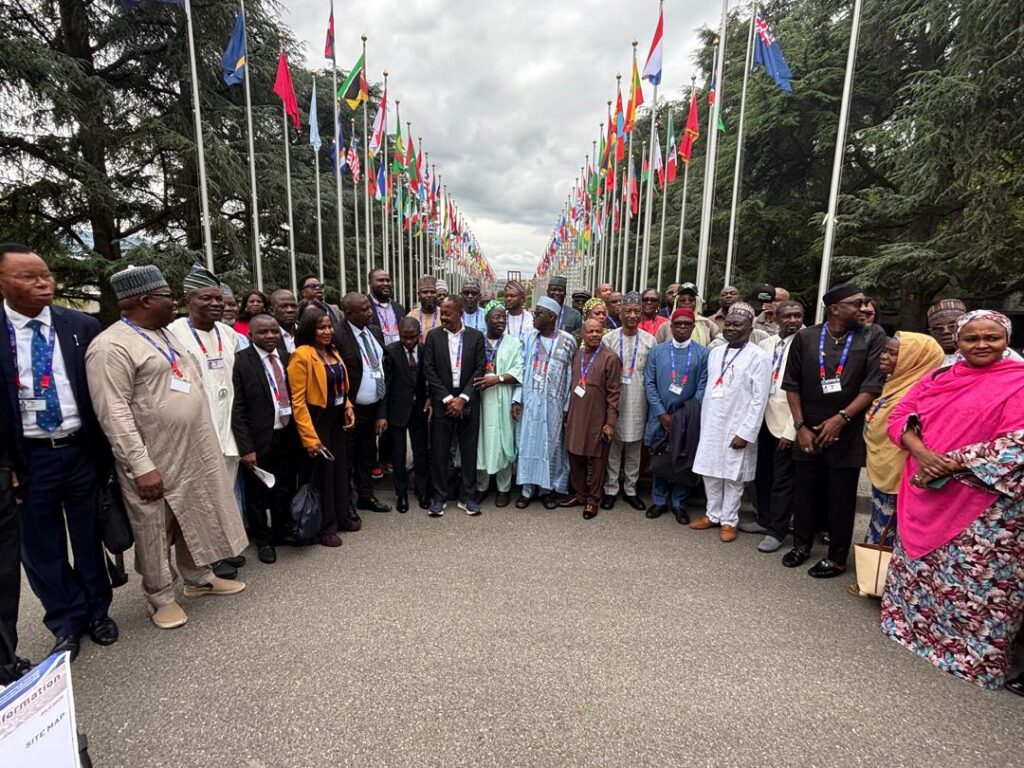
Speaking in Geneva, Switzerland, on the sidelines of the 114th Session of the International Labour Conference (ILC), Aremu described the initiative as a strategic response to the rapidly changing global labour market driven by artificial intelligence and emerging technologies.
According to him, the programme is designed to train workers, government officials and employers of labour in AI, robotics and other advanced technologies, while creating opportunities for youth employment and national economic growth.
“The rapid pace of AI development requires that labour education becomes more flexible and dynamic, moving away from hitherto rigid models,” Aremu said. “We must focus on continuous adaptation, AI literacy, machine learning ethics and data science if Nigeria is to remain competitive in the global economy.”
He called for sustained reforms in Nigeria’s education system and labour market institutions to ensure workers acquire not only technical competencies but also emotional intelligence and lifelong learning capabilities needed in the digital age.
Aremu made the remarks while reacting to the report of the Director-General of the International Labour Organisation (ILO), Gilbert F. Houngbo, presented to the 2026 International Labour Conference under the theme, “A Moment of Choice: Harnessing Artificial Intelligence for Decent Work.”
In the report, Houngbo observed that while AI holds immense potential to expand opportunities and reshape work globally, it also presents serious challenges that require deliberate policy choices and social dialogue.
“The future of work will not be determined by technology alone, but by the policies, institutions and social dialogue that guide it,” Houngbo said. “The choices we make today will determine whether AI broadens opportunity and shared prosperity or deepens inequality and insecurity.”
The ILO Director-General stressed that governments must invest in skills development, strengthen labour and social protection systems, support small and medium-sized enterprises and uphold fundamental principles and rights at work to ensure technology serves humanity.
Aremu, who is part of Nigeria’s government delegation to the conference led by the Minister of Labour and Employment, Muhammad Maigari Dingyadi, commended the ILO for what he described as a balanced and realistic assessment of the opportunities and risks associated with artificial intelligence.
He said Nigeria shares the ILO’s position that while countries must harness the productivity and innovation benefits of AI, they must also ensure that technological advancement does not undermine workers’ rights, social inclusion and the principles of decent work.
The MINILS Director-General also praised President Bola Ahmed Tinubu’s Renewed Hope Agenda for recognising the transformative potential of technology through the establishment of the Federal Ministry of Communications, Innovation and Digital Economy and its digital transformation blueprint.
According to Aremu, AI has the capacity to boost productivity, create new jobs and unlock economic opportunities for businesses and workers, but governments, organised labour and employers must work together to mitigate the risks of job displacement, inequality and exclusion.
“Artificial intelligence challenges all stakeholders to invest more in education and skills development with the objective of maximising the benefits of new technology while minimising its disruptive impact on work,” he said.
The 114th Session of the International Labour Conference, which runs from June 1 to 12 in Geneva, has brought together thousands of government, worker and employer representatives from the ILO’s 187 member states. Key issues under discussion include artificial intelligence and technology, decent work in the platform economy, gender equality, and strengthening social dialogue as the world navigates the future of work.