PSI demands immediate end to attacks on workers in Africa
The Public Services International (PSI), a global labour movement has raised fresh concerns over growing violations of workers’ rights across Africa, with leaders calling on governments and employers to respect freedom of association, end harassment of trade unionists, and uphold international labour standards.
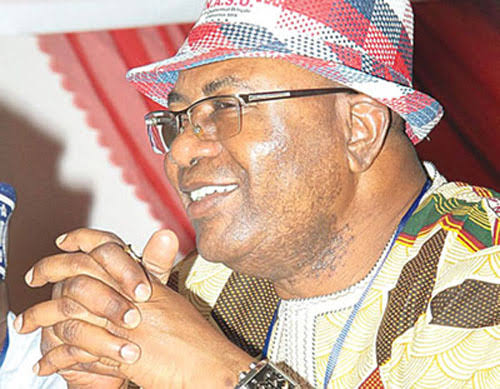
Speaking on the challenges facing workers and trade unions worldwide, former PSI Vice President for Africa and Arab Countries, Peters Adeyemi, said attacks on labour rights remain widespread, particularly in Africa and West Africa, where workers continue to face intimidation, harassment, and restrictions on union activities.
According to Adeyemi, one of the most troubling cases is unfolding in Liberia, where authorities have allegedly undermined trade union operations by failing to implement the check-off system that allows unions to collect dues from members. The situation, he said, has left many unions struggling financially and weakened their ability to represent workers effectively.
“The easiest way to cripple a trade union organisation is to deny it its source of revenue,” Adeyemi said. “In Liberia, unions are virtually living from hand to mouth because the government has refused to implement the check-off system.”
He further disclosed that a PSI-affiliated labour leader in Liberia was recently prevented from returning to his country, forcing the international organisation to provide accommodation and eventually employment support. The incident, he noted, is part of a broader pattern of harassment directed at trade union activists.
Adeyemi recalled that PSI had previously intervened in the case of a trade union general secretary who was arrested, prompting an emergency resolution and advocacy efforts that attracted international attention. “We had to mobilise governments and labour organisations across Africa and Europe because the situation demanded urgent action,” he said.
Beyond direct harassment, Adeyemi identified restrictions on workers’ rights to organise as one of the most persistent threats facing labour movements today. He accused some employers of deliberately preventing workers from joining unions in order to maintain exploitative conditions.
“The right to organise is a fundamental human right, yet many organisations continue to frustrate workers who want to belong to unions,” he said. “This is often done to ensure that workers remain vulnerable and unable to collectively defend their interests.”
In Nigeria, Adeyemi expressed particular concern about privately owned universities and tertiary institutions, which he said have consistently resisted unionisation despite constitutional and international guarantees protecting workers’ rights.
He argued that many private university proprietors, including influential political figures and former public office holders, are failing to uphold the very laws and conventions they are expected to respect.
“The irony is that many of those violating these rights are people who should be champions of democracy and the rule of law,” Adeyemi stated. “Nigeria has ratified International Labour Organisation conventions on freedom of association, and Section 40 of the Constitution guarantees that right.”
Adeyemi condemned the growing practice of employers inserting anti-union clauses into employment contracts, forcing workers to agree not to join trade unions as a condition of employment.
“Employers prepare letters of appointment with clauses stating that workers must not belong to a union,” he said. “Because unemployment is high, many people feel they have no choice but to sign. That is unacceptable and contrary to international labour standards.”
He warned that such practices not only undermine workers’ rights but also weaken democratic institutions and social dialogue mechanisms that are essential for economic development and industrial peace.
The veteran labour leader stressed that governments, employers, and regulatory authorities must take urgent steps to ensure compliance with national constitutions and international labour conventions. He urged stronger enforcement mechanisms to protect workers from intimidation and discrimination based on union membership.
Adeyemi also called on workers across Africa to remain united and vigilant in defending their rights, stressing that collective action remains one of the most effective tools for achieving fairness and dignity in the workplace.
“The struggle for workers’ rights is fundamentally a struggle for human rights,” he said. “No worker should be punished, intimidated, or denied opportunities simply because they choose to belong to a trade union.”
As labour activists continue to push for reforms, Adeyemi’s message was clear: governments and employers must stop undermining freedom of association and honour their obligations under national and international law. For millions of workers across Africa, he argued, the time to act is now.