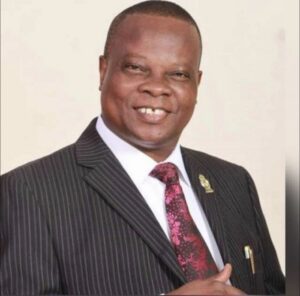
Nigeria must stop treating Labour Agreements with contempt — PSI Vice President, Peters Adeyemi
Bimbola Oyesola
Nigeria at the just concluded 114 International Labour Conference (ILC) organised by the International Labour Organization (ILO) in Geneva, Switzerland once again came under the spotlight where concerns over the country’s compliance with core labour conventions took centre stage. Among the issues attracting international attention were alleged violations of workers’ rights, restrictions on freedom of association, refusal to implement duly negotiated collective agreements, and what labour leaders describe as persistent disregard for international labour standards.
Beyond Nigeria, the challenges confronting workers across Africa continue to mount. Trade unions are battling anti-union practices, shrinking civic space, privatization of public services, and worsening economic conditions.
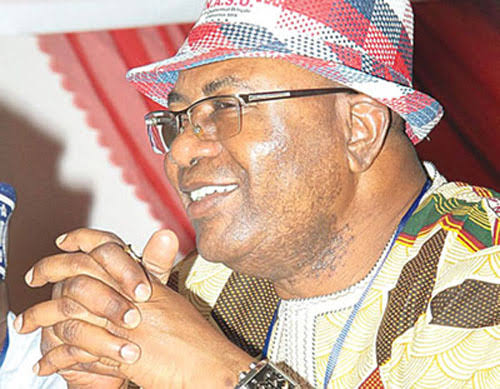
In this interview, Vice President of Public Services International (PSI) for Africa and Arab Countries, Peters Adeyemi, who is also the General Secretary of the Non-Academic Staff Union of Educational and Associated Institutions (NASU) reflects on Nigeria’s appearance before the ILO Committee on the Application of Standards, the state of labour rights across Africa, the campaign against privatization, and the Federal Government’s relationship with university unions. He argues that governments must move beyond rhetoric and begin to respect agreements they have freely entered into with workers.
He also raised concerns over the rapid depreciation of African currencies, arguing that shrinking currency values have significantly eroded workers’ purchasing power, fuelled poverty and insecurity, and undermined decent work across the continent. According to him, governments have continued to pursue policies that impoverish workers while abandoning public services through privatization.
Excerpts:
Governments indictment for non-compliance with ILO conventions
At least five cases involving governments’ failure to comply with core ILO conventions are before the conference this year. However, the most prominent is Nigeria’s case, which centres on freedom of association and collective bargaining.
The matter stems largely from developments in Nigeria, including the refusal of a state government to recognise the Nigeria Labour Congress (NLC), among several other issues affecting trade union rights. The Nigerian government has presented its defence, and we expect the ILO to deliver its observations or recommendations.
That is the standard procedure. Once a government is invited to defend its position, it also seeks the support of friendly governments, both within Africa and beyond. The NLC did the same through its international network. As an affiliate of the International Trade Union Confederation (ITUC), it received interventions and solidarity from labour organisations across different countries.
PSI presentation before the committee
Our intervention focused on the refusal by governments to implement collective agreements that have already been negotiated and signed.
Unfortunately, Nigeria has become notorious for this. There appears to be a nonchalant attitude towards agreements reached with workers. Government officials negotiate, sign agreements and then leave them unimplemented for years. That is unacceptable.
We made it clear before the committee that governments must be held accountable for agreements they willingly enter into. Respecting collective bargaining is not optional; it is a fundamental principle of industrial relations and one of the obligations arising from ILO conventions.
We are hopeful that after all the submissions from governments, workers’ representatives and employers, the ILO will announce its position on the matter.
PSI concerns about several labour rights violations across Africa.
The challenges are numerous, particularly in Africa and West Africa. We continue to witness widespread violations of human rights and trade union rights.
Take Liberia as an example. The government has consistently failed to implement the check-off system, which allows unions to receive membership dues through payroll deductions. Without that mechanism, unions are deprived of their primary source of funding and are forced to operate from hand to mouth.
One of the quickest ways to weaken or destroy a trade union is to deny it financial resources.
Only last month, one of our PSI leaders was prevented from returning to Liberia. We had to accommodate him elsewhere and eventually offered him employment within the organisation.
There was also the arrest of the General Secretary of one of our affiliates. PSI immediately adopted an emergency resolution and communicated our concerns to governments across Africa and Europe. It was only after sustained international pressure that he was released.
The right to organise also remains a major challenge. In many countries, employers deliberately frustrate workers’ attempts to form or join trade unions because they want to continue exploiting them.
Nigeria provides a clear example. Many privately owned universities have refused to allow workers to unionise. During our discussions, we reminded the government that workers cannot be denied their constitutional and internationally recognised right to belong to trade unions of their choice.
Ironically, many of those who own these institutions are former senior public office holders, former vice presidents, former attorneys-general and former governors. People who should ordinarily champion respect for the Constitution and the rule of law.
Instead, they violate both the ILO Convention on Freedom of Association and Section 40 of the Nigerian Constitution, which guarantees freedom of association.
Some employers even include clauses in appointment letters requiring workers to agree that they will not belong to any trade union. Because unemployment is high, many desperate job seekers sign those conditions without protest.
These are some of the challenges confronting workers across the continent, and they require urgent attention.
Declining value of African currencies and its effect on workers.
One of the biggest challenges confronting workers today is the steady depreciation of our national currencies. The impact is enormous because it directly affects workers’ purchasing power and living standards.
For instance, if I exchange 500 US dollars in Ghana, Kenya or Rwanda, I receive amounts that reflect the relative strength of those currencies. But in Nigeria, the equivalent runs into hundreds of thousands of naira because of the severe depreciation of the currency.
The implication is that workers’ wages continue to lose value. Their salaries can no longer meet their basic needs, even when they receive periodic wage adjustments.
There appears to be a gradual process in which economic policies continue to weaken local currencies. Once the currency loses value, the real income of workers also declines. The cost of living rises, inflation worsens, and workers become poorer.
When workers can no longer survive on legitimate earnings, society begins to experience rising insecurity, criminality and social instability. These are realities that governments cannot ignore.
In countries such as Nigeria, many people complain about insecurity. But unless governments strengthen workers’ welfare and improve living conditions, those challenges will persist. A worker whose salary can no longer sustain a family is placed under tremendous economic pressure.
PSI has consistently opposed the privatization of public services, what is the present situation?
Our position has not changed. We remain opposed to the indiscriminate privatization of essential public services.
During election campaigns, politicians make promises to improve public services. But once they assume office, many of them begin to withdraw government from its responsibilities and transfer public assets into the hands of private interests, often their associates.
That is why the struggle against privatization has become increasingly difficult.
What is even more disturbing is that many of the privatized enterprises have failed to deliver the promised improvements. If the objective was efficiency, then the evidence in many countries simply does not support that argument.
Take Nigeria Airways, for example. We were told that government had no business being in business, and the national carrier was allowed to collapse.
Today, people point to Ethiopian Airlines as a success story. But they conveniently ignore the fact that the Ethiopian government has remained actively involved in the airline. It did not completely relinquish ownership or responsibility. Today, Ethiopian Airlines is the largest and one of the most successful airlines in Africa.
The same argument was used to justify the privatization of Nigeria’s power sector. Years later, Nigerians are still grappling with poor electricity supply despite repeated tariff increases.
I often use a simple analogy. If you sell your car to someone, the buyer inspects it, agrees to the price and pays for it. It makes no sense for that buyer to return later asking you to repair the same vehicle at your own expense.
Yet that is exactly what governments have done with many privatized enterprises. They sell public assets, and when the private investors fail, government still spends public money trying to rescue them. That is not only bad economics; it raises serious questions about transparency and accountability.
Uganda offers another example. After privatizing its electricity sector for several years, the government eventually terminated the arrangement and resumed control because the privatization agenda had failed to deliver the expected results.
Unfortunately, the trend continues. Today, governments are privatizing education, healthcare and water supply.
Sometimes I jokingly say that if this continues unchecked, one day they may even privatize the air we breathe and ask people to pay before they can breathe.
But beneath that humour lies a serious concern. Essential public services exist to serve citizens, not merely to generate profits for private interests.
Our campaign therefore continues, although I must admit that we have not made the level of progress we had hoped for.
Long-running dispute between the Federal Government and university-based unions over the implementation of agreements/Alleged
preferential treatment of ASUU
First, let me make it clear that we are not in conflict with ASUU. The responsibility of every employer, especially government, is to provide a level playing field for all unions.
Successive governments have often adopted a divide-and-rule approach in dealing with university unions. That is unhealthy for industrial relations.
The current administration concluded negotiations with ASUU, and I believe part of the motivation was to ensure that ASUU did not embark on another prolonged strike.
Every government wants to claim that it maintained stability in the university system.
As someone in NASU, I have no difficulty acknowledging the role ASUU has played over the years.
Whether people agree with their methods or not, ASUU has consistently demonstrated courage in defending its members’ interests. They are prepared to struggle for what they believe is right. Sometimes they succeed; sometimes they do not.
But one important lesson from their experience is that trade unions achieve very little without determination and persistence.
Governments rarely concede workers’ demands without sustained engagement and pressure. That is why every union must remain committed to defending the interests of its members while ensuring that negotiations are conducted responsibly and in good faith.
May 31 deadline for concluding negotiations with the Federal Government.
Industrial relations require patience, strategy and good judgment. When we fixed the May 31 deadline, it was based on the expectation that negotiations would be concluded within that period. As discussions progressed, however, we reached a stage where some of the outstanding issues required consultations beyond the negotiating team.
We assessed the situation carefully and concluded that the government team was engaging us sincerely.
For that reason, we decided that commencing a strike immediately after the deadline would not necessarily produce a better outcome.
As trade union leaders, we are always prepared to defend workers’ interests, including through industrial action where necessary. But leadership also requires wisdom.
When facts on the ground indicate that progress is being made, it is only reasonable to allow the process to continue.
That explains why we suspended the planned strike.
However, let me be clear: if negotiations break down or government fails to fulfil its commitments, we will not hesitate to resume the struggle. Industrial action remains a legitimate option whenever it becomes necessary to protect the rights and welfare of our members.
As the 114 ILC concluded its deliberations, labour unions across Africa will be watching closely to see whether governments match their commitments with concrete action. For Adeyemi, the message is clear: respecting workers’ rights, honouring agreements and protecting public services are not acts of goodwill, they are obligations that governments must fulfil.